
CLEAR VISION STARTS WITH THE RIGHT NEXT STEP
Lens Dislocation in Tampa Bay, FL
When your vision starts to feel off, it can affect how you move through your day. Reading may take more effort. Driving may feel less certain. Even routine tasks can become frustrating.
Lens dislocation can disrupt how your eye focuses light, but it can be effectively treated. At Gulfcoast Eye Care in Tampa Bay, we guide you through what is happening and help you move forward with a clear plan and greater confidence.
Schedule An Appointment Today
LENS DISLOCATION
What Is Lens Dislocation?
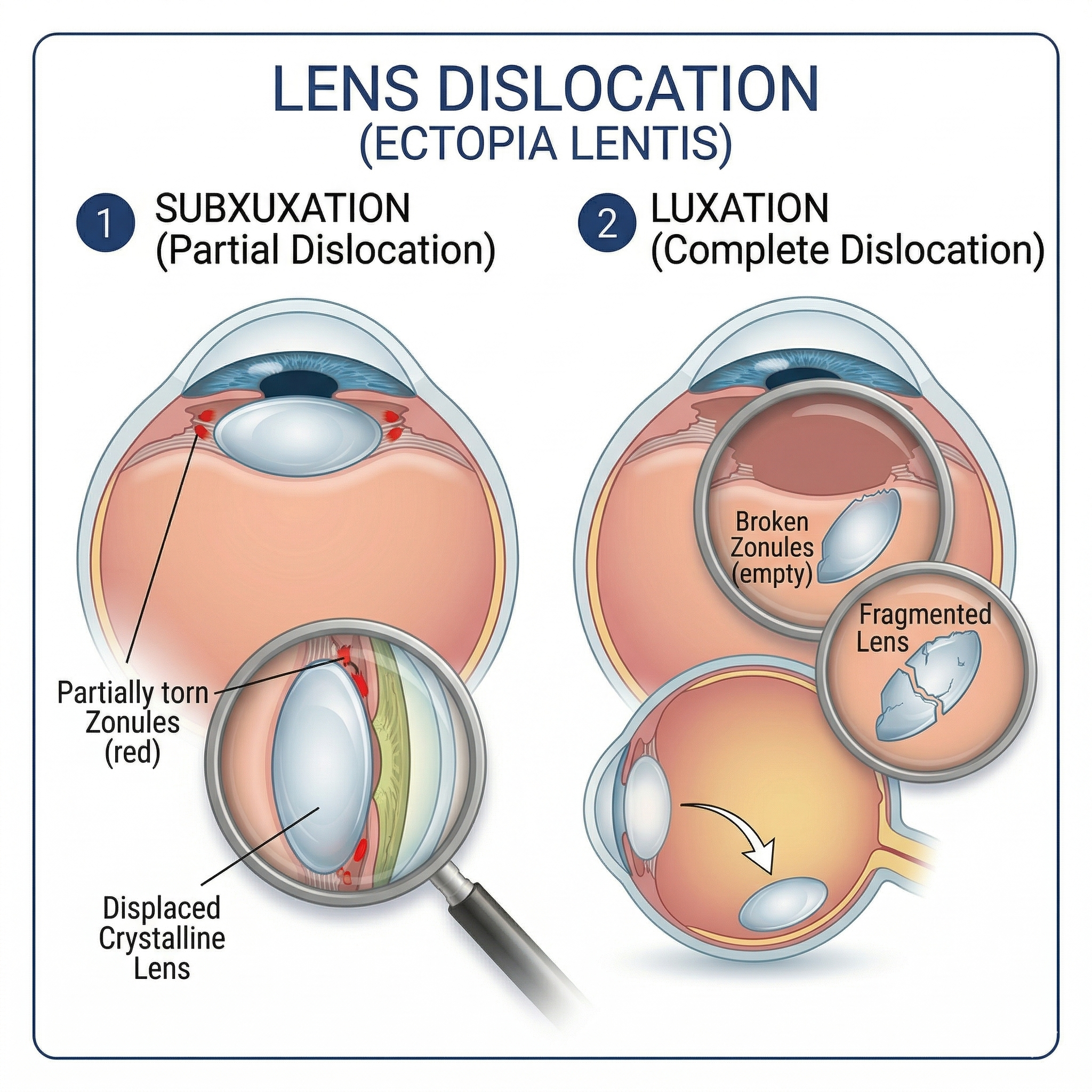
Lens dislocation happens when the lens inside your eye moves out of its normal position. This lens sits just behind the pupil and plays a key role in how your eye focuses light, allowing you to see clearly.
Under normal conditions, the lens is held in place by tiny fibers that keep it steady. These fibers act like support structures, keeping everything aligned so your vision stays stable. When these fibers weaken or break, the lens can shift. This is what leads to a dislocated lens.
This change can affect either your natural lens or a lens implant placed during cataract surgery or refractive lens exchange. In both cases, when the lens is no longer properly supported, it cannot focus light properly, which can cause noticeable changes in how you see.
CAUSES AND RISKS
What Causes a Dislocated Lens?
A dislocated lens usually develops when the structures that support the lens weaken or become damaged over time. Lens dislocation can happen for several reasons, including:
- Injury or trauma to the eye
- Certain inherited conditions, such as Marfan syndrome
- Metabolic conditions like homocystinuria
- Pseudoexfoliation syndrome
- High levels of myopia
- Changes that occur over time after cataract surgery
If you have had cataract surgery, it is important to know that complications are uncommon. However, a dislocated lens eye can develop even years later as the fibers that hold the lens weaken.
SIGNS AND SYMPTOMS
Eye Lens Dislocation Symptoms
The most common symptom of a dislocated lens is a change in how clearly you see. For many people, their vision feels unstable.
Common eye lens dislocation symptoms include:
- Blurry or shifting vision
- Double vision
- Eye discomfort or headaches
- Seeing the edge of a lens implant
- Difficulty focusing during everyday tasks
In some cases, a dislocated lens may present with subtle or no symptoms. That is why a routine eye exam can catch changes early.

What Life Looks Like After RLE Eye Surgery
Your treatment plan starts with a comprehensive eye exam. This allows our eye doctor to understand how the lens is positioned and how it is affecting your vision. Depending on your needs, dislocated lens treatment may include:
Careful Monitoring
If your vision is stable and symptoms are minimal, regular follow-up visits may be recommended.
Lens Repositioning
In some cases, the existing lens can be moved back into a stable position and secured.
Lens Replacement
If the lens cannot be repositioned, it may be removed and replaced with a new lens implant.
Dr. Michael Manning, a board-certified ophthalmologist at Gulfcoast Eye Care, uses advanced techniques to determine the safest and most effective approach for your eye health.

GULFCOAST EYE CARE
Take the Next Step Toward Clear, Stable Vision with Eye Care in Tampa Bay, FL
You don’t have to adjust your life around changing vision.
If you are experiencing symptoms of lens dislocation or have concerns after cataract surgery, our team is here to help you move forward with clarity and confidence.