
EXPLORE
Dry Eye Disease Treatment in Tampa Bay, Florida
Dry eye disease can affect how you read, drive, work on screens, and even enjoy time outdoors.
At Gulfcoast Eye Care, our goal is simple. Help you feel comfortable again so you can focus on your life, not your eyes. With advanced diagnostics and personalized treatment, we guide you step by step toward clearer, more stable vision.
Schedule An Appointment Today
DRY EYE DISEASE
What Is Dry Eye Disease?
Dry eye disease occurs when your eyes cannot maintain a healthy tear film. This can happen when tear production is too low or when tears evaporate too quickly.
Your tear film is made up of water, oil, and mucus. When any part of this system is disrupted, your eyes feel irritated, unstable, and fatigued.

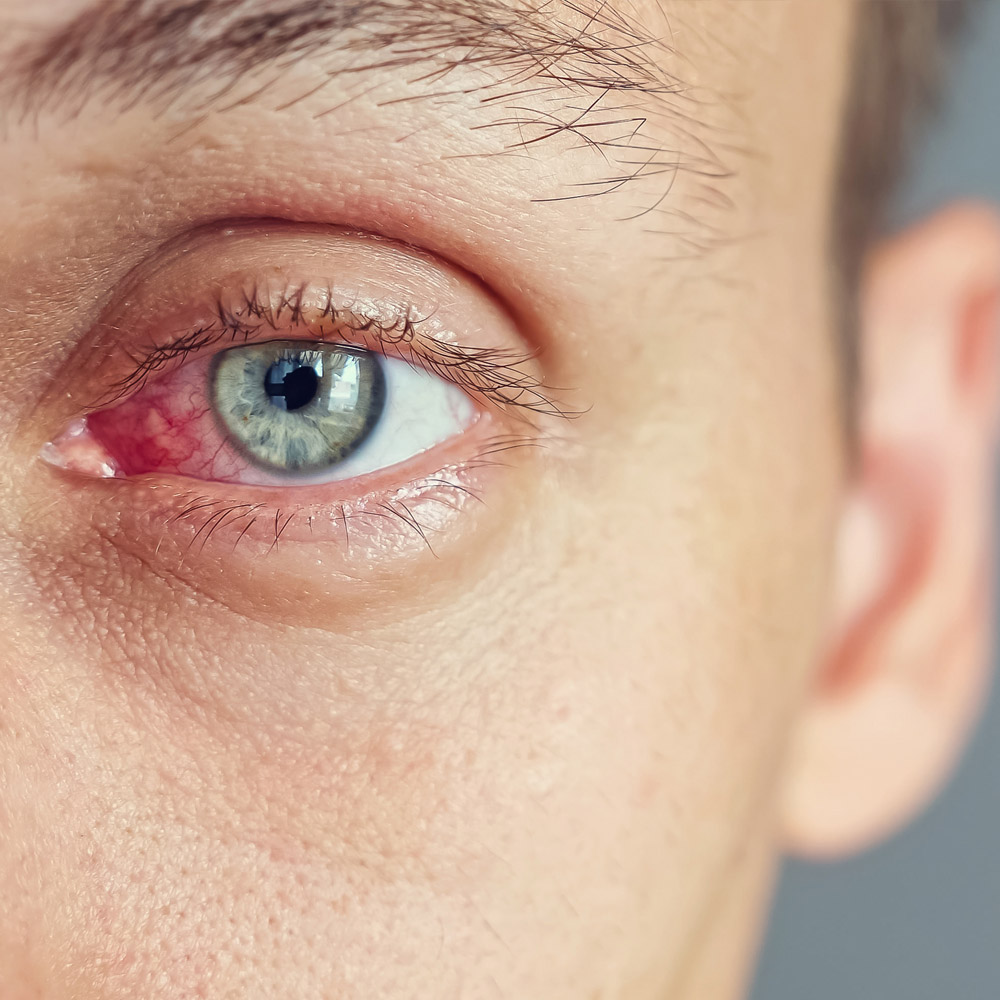
DRY EYE SYMPTOMS
Common Symptoms of Dry Eye
Dry eyes include a wide range of symptoms that can change throughout the day. You may notice:
- Burning or stinging
- Watery eyes that still feel dry
- Blurred or fluctuating vision
- Sensitivity to light
- Redness
- A gritty or sandy feeling
- Eyes feel heavy and tired all the time
- Discomfort when wearing contact lenses
These dry eye symptoms often worsen with screen use, air conditioning, or long days of visual tasks.
CAUSES OF DRY EYE
What Causes Dry Eye?
Dry eye disease is often linked to changes in how your tears are produced or maintained.
Meibomian Gland Dysfunction
One of the most common causes is meibomian gland dysfunction. These oil glands line your eyelids and help prevent tears from evaporating too quickly. When they are blocked or not working properly, your tear film breaks down faster.
Reduced Tear Production
Some patients simply do not produce enough tears. This can be related to age, medications, or certain health conditions.
Lifestyle and Environmental Factors
- Wearing contact lenses for long periods
- Screen use and reduced blinking
- Dry or windy environments
- Poor eyelid hygiene
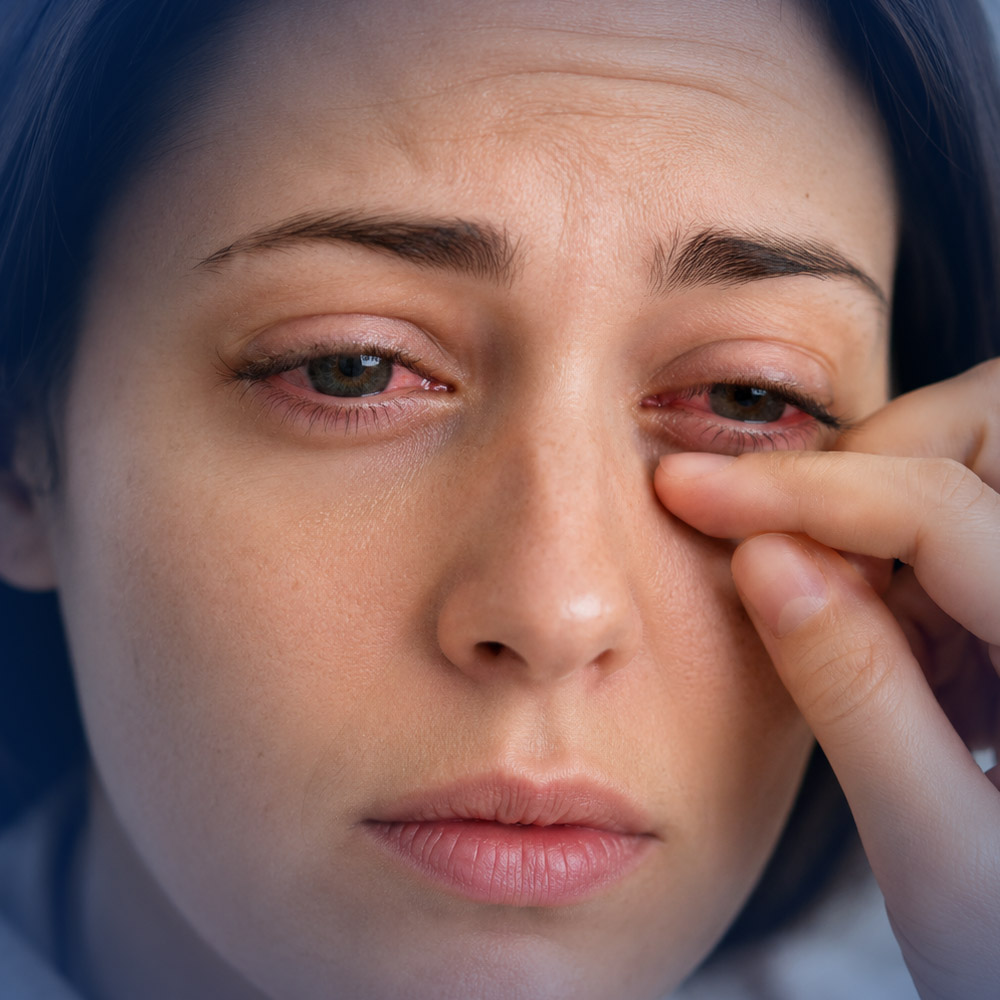
DRY EYE SYNDROME
Types of Dry Eye Syndrome
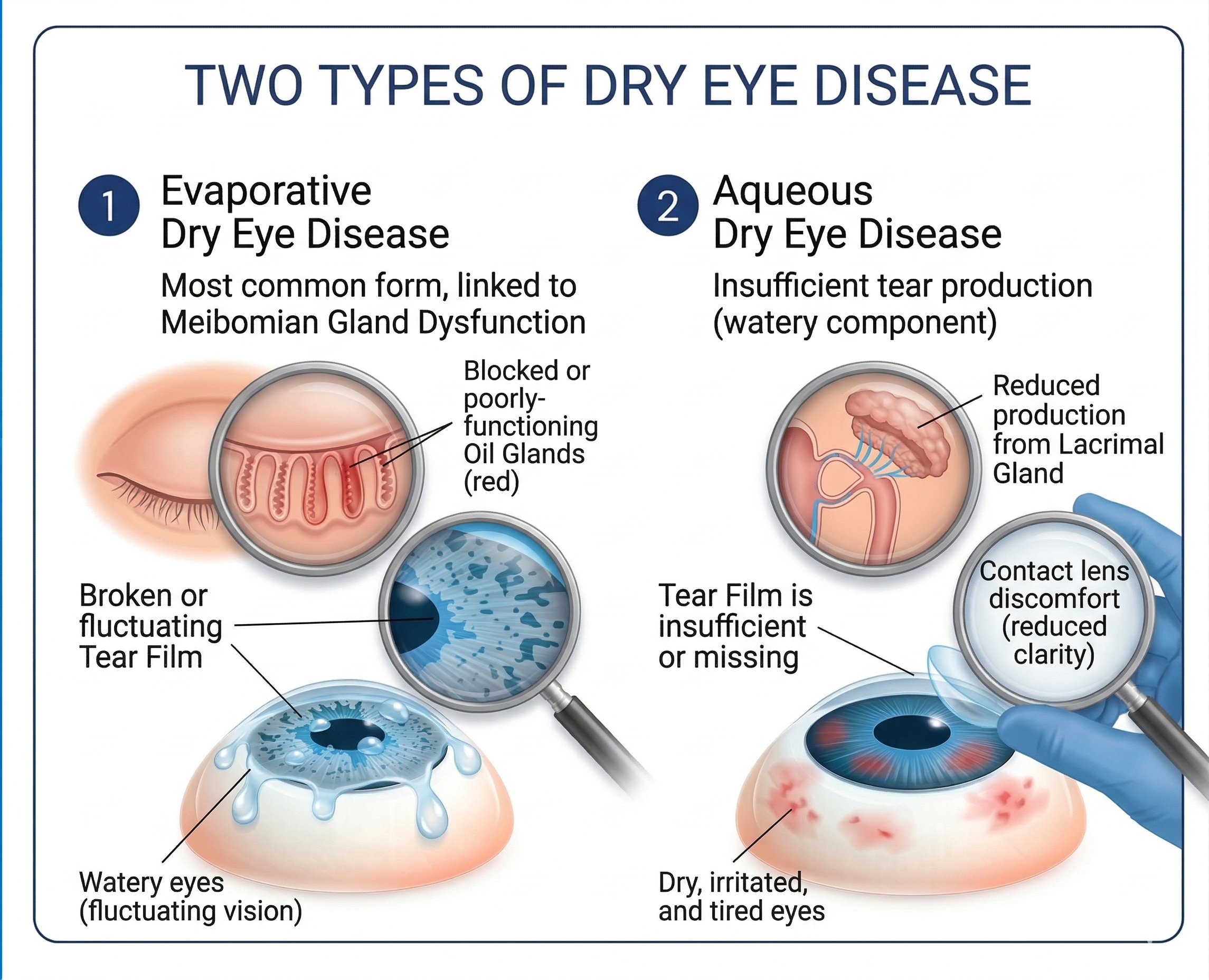
There are two main types of dry eye disease. While the symptoms of dry eye may seem similar, the causes differ, and understanding this helps guide effective treatment.
-
Evaporative Dry Eye Disease:
This is the most common form of dry eye disease, often linked to meibomian gland dysfunction. When your oil glands are blocked or not working properly, the tear film breaks down faster, leading to irritation, watery eyes, and fluctuating vision.
-
Aqueous Dry Eye Disease:
Aqueous dry eye occurs when your eyes do not produce enough of the watery component of tears. Without sufficient tear production, your eyes may feel dry, irritated, and tired. This can also make wearing contact lenses uncomfortable and reduce overall visual clarity.
Dry Eye Treatments at Gulfcoast Eye Care
Treating dry eye disease starts with understanding why your eyes feel uncomfortable. After a detailed eye exam, we create a personalized plan to improve tear production, support your tear film, and reduce inflammation so your vision feels stable again.
OptiLight IPL
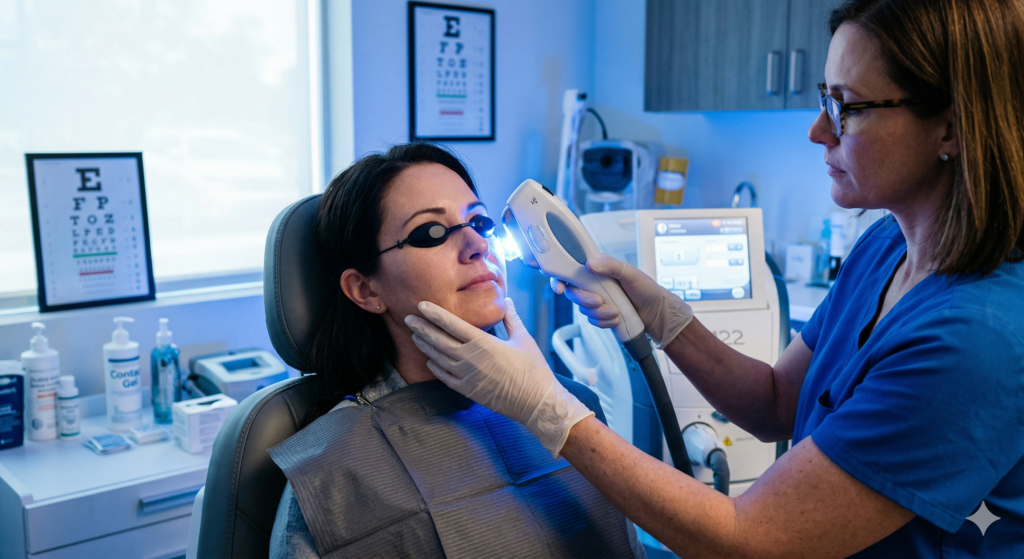
Intense pulsed light is a modern approach to treating dry eye caused by inflammation and meibomian gland dysfunction.
This treatment uses gentle pulses of light around the eyes to:
- Reduce inflammation that disrupts the tear film
- Improve how your oil glands function
- Slow tear evaporation so your eyes stay hydrated longer
Each session takes about 15 minutes and is performed in the office.
LipiFlow®
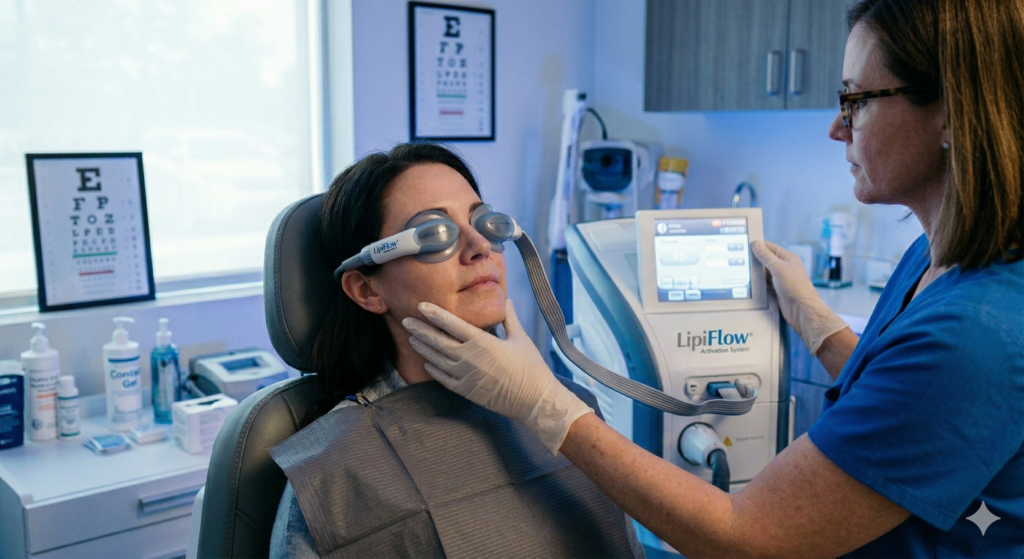
LipiFlow® is an in-office treatment designed to clear blocked oil glands and restore healthier tear quality.
During this treatment:
- Gentle warmth and pressure are applied to the eyelids
- Blocked oil glands are opened and cleared
- Your tear film becomes more stable
This process improves lubrication of the eye and helps reduce symptoms such as burning and watery eyes.
Punctal Plugs
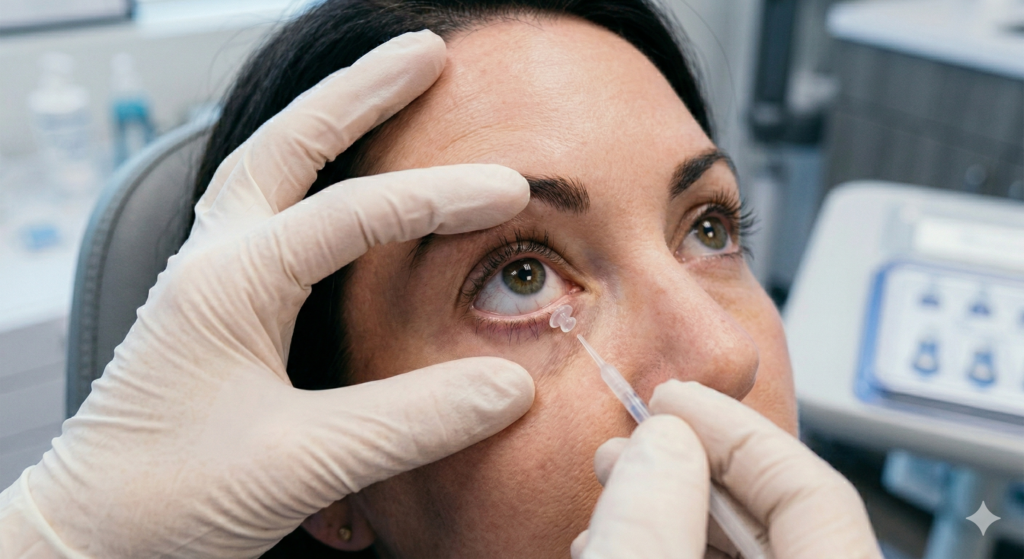
Punctal plugs are small, comfortable devices placed in the tear ducts to help your eyes retain moisture.
By slowing tear drainage, this treatment:
- Keeps natural tears on the eye surface longer
- Improves hydration and comfort
- Helps reduce irritation and blurred vision
This option is often recommended when tear production is low or when other treatments have not provided enough relief.
More Management Options
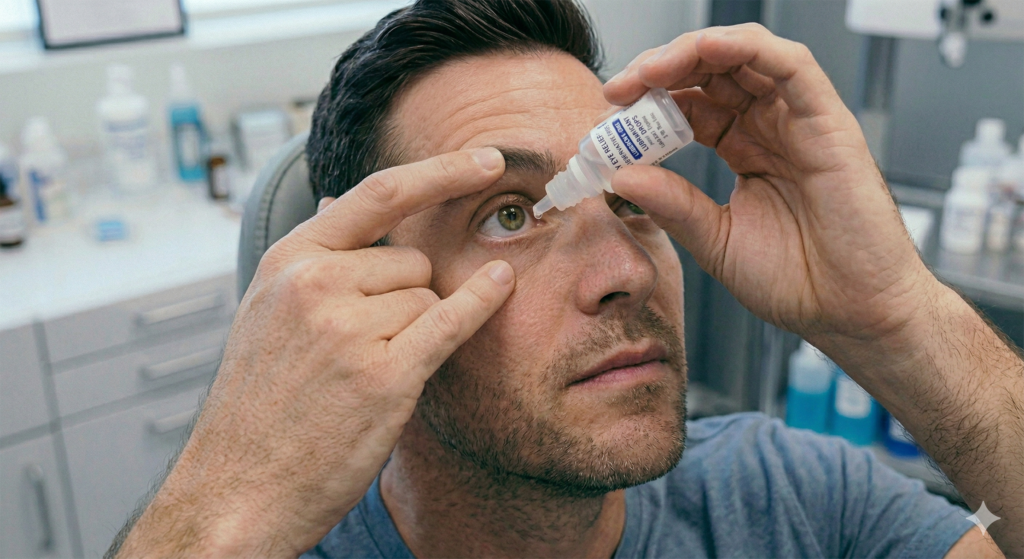
Because dry eye disease can have different causes, your treatment plan may include a combination of therapies to support long-term relief.
These may include:
- Preservative-free artificial tears to protect the eye surface
- Prescription eye drops to reduce inflammation
- A warm compress to support healthy oil glands
- Omega-3 fatty acid supplements to help reduce inflammation
- Adjustments if wearing contact lenses are contributing to symptoms
Our goal is to help your eyes feel comfortable throughout the day so you can focus on your routine without distraction.
Start Seeing Clearly and Comfortably in Tampa, FL
Dry eye disease does not have to control your day. With the right eye care, you can reduce symptoms, improve comfort, and feel confident in your vision again.
At Gulfcoast Eye Care, we will guide you through every step, from diagnosis to treatment, so you always know what comes next.