
PROTECT YOUR VISION BEFORE IT CHANGES YOUR LIFE
What Are Ocular Migraines? Find Migraine Treatment in Tampa Bay
An ocular migraine, sometimes called an eye migraine or optical migraine, causes temporary visual disturbances. Although many episodes don’t harm your vision, a doctor should evaluate any new symptoms.
Schedule An Appointment Today
SYMPTOMS
Common Ocular Migraine Symptoms
Ocular migraine symptoms can appear suddenly, sometimes without a headache. Visual disturbances often start in one area of your vision and gradually spread.
Common symptoms of eye migraines include:
- Flashing or flickering lights
- Shimmering or zigzag patterns
- Expanding blind spots
- Distorted, blurry, or wavy vision
- Seeing patterns resembling cracked glass
- Temporary difficulty reading or focusing
- Increased sensitivity to light
These symptoms can interrupt reading, working, or driving. Migraine aura usually affects both eyes, even when the disturbance seems stronger on one side.
If these symptoms appear for the first time, seek medical care. Don’t assume a migraine is responsible.


OCULAR EYE CONDITIONS
Ocular Migraines vs. Migraine With Aura
Migraine with aura causes temporary neurological symptoms, including flashing lights, blind spots, and visual distortions. These changes usually affect both eyes. They may occur before a headache, during one, or without any headache.
Retinal migraine is rare and affects vision in one eye. It may cause temporary blind spots or vision loss, with or without a headache.
Migraine without aura causes headaches without the visual warning signs associated with aura.
Tell your doctor whether symptoms affect one eye or both. This detail can help identify the cause and guide treatment.
What Causes Ocular Migraines?
During migraine aura, a wave of electrical activity travels across the brain. Doctors call this cortical spreading depression. It can affect how your brain processes visual information.
Researchers haven’t fully explained retinal migraines. Temporary changes in retinal nerve activity or blood flow may contribute.
Several factors can trigger migraines in susceptible people. These include bright lights, stress, poor sleep, hormonal changes, strong smells, and changes in caffeine intake.
Some people also notice symptoms after eating certain foods.
Tracking possible triggers can help you recognize patterns and reduce future episodes.
PREVENTION
How to Stop an Ocular Migraine
Move to a quiet, dimly lit room. Avoid bright screens, drink water, and allow your vision to recover. These steps may ease discomfort, although they won’t necessarily stop the episode.
Never drive while experiencing visual disturbances.
If episodes happen frequently, your doctor may recommend medication or preventive treatment. The right approach depends on your symptoms and medical history.
Seek urgent medical care for sudden vision loss, especially when it affects only one eye.


Episode Duration
How Long Do Ocular Migraines Last?
Symptoms often begin gradually, spreading across your visual field, and then disappear. Retinal migraine episodes may also last several minutes.
Some people develop headaches afterward. Others experience visual symptoms without head pain.
Fatigue and difficulty concentrating can continue after an episode.
Seek prompt medical attention if your symptoms last longer than 60 minutes, your vision does not fully return to normal, or you experience symptoms that are different from previous episodes.
Know the Warning Signs
Are Ocular Migraines Dangerous?
However, sudden vision changes can signal other conditions, including retinal problems, reduced blood flow, or neurological emergencies.
Seek emergency care for sudden vision loss or a dark curtain across your sight. Other warning signs include weakness, facial drooping, trouble speaking, or a sudden, severe headache.
New flashes with many floaters or a shadow across your vision also require urgent evaluation.
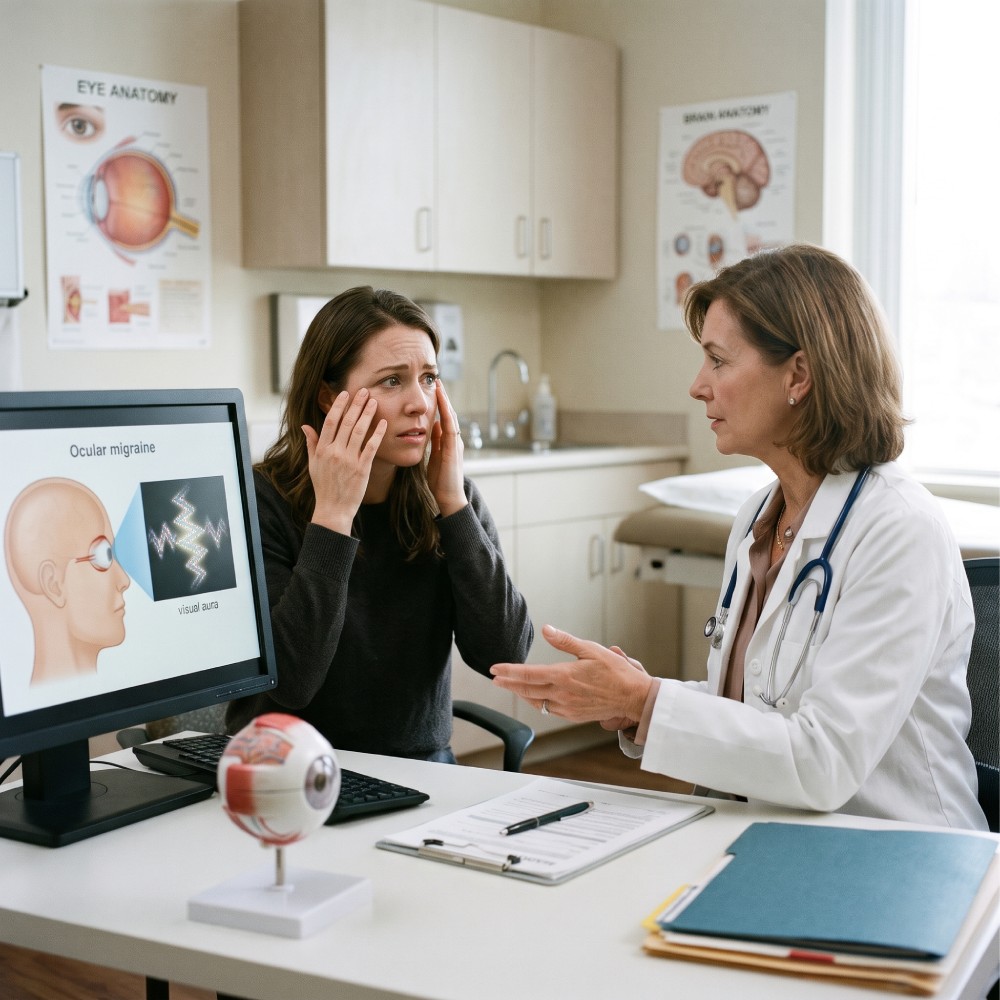
If symptoms appear for the first time or change unexpectedly, contact a healthcare professional for an assessment.

Reduce Future Episodes
How to Prevent Ocular Migraines
Keep a diary of your symptoms. Record when episodes begin, how long they last, and what happened beforehand.
Track your sleep, stress, meals, caffeine intake, and exposure to bright lights.
Regular sleep, balanced meals, hydration, and stress management may reduce migraine frequency.
Avoiding known triggers can also help, although some episodes occur without an obvious cause.
Discuss frequent symptoms with your healthcare provider to determine whether preventive treatment could help.
How to Treat an Ocular Migraine
For occasional visual aura, your doctor may recommend rest, trigger management, and symptom monitoring.
When headaches accompany visual disturbances, pain relief or migraine-specific medication may help.
Frequent episodes may require prescription preventive medication.
Retinal migraine needs careful evaluation before treatment. Certain medications that affect blood vessels may not suit patients with suspected retinal migraine.
An eye examination can help rule out eye-related conditions. Your eye doctor may also recommend neurological testing or additional medical care.

TRUSTED EYE CARE
Get Clear Answers About Ocular Migraines in Tampa Bay & St. Petersburg
Our team assesses your visual symptoms and helps you understand your next steps.
An examination can help identify potential causes of recurring disturbances and determine whether you need additional care.
Contact Gulfcoast Eye Care to discuss your symptoms and schedule an evaluation at one of our Tampa Bay locations.